We go back to the palenque, only agave, fire and time.
Nothing added. Nothing rushed.
In a world of shortcuts, Amá chose the long road. Agave hearts roasted for days in a pit of earth and stone, crushed, left to ferment in open air, then distilled slowly. Every step done the way her family has always done it.
Agave that waits eight years in the red earth.
Our foundation. Our proof.
Espadín takes six to eight years to ripen under the Oaxacan sun, wild tobalá up to fifteen. We wait for every plant. You can taste the years in the glass: smoke first, then cooked agave, then something sweet that stays.
Nothing is added. Everything is waited for.
Mezcal is not made. It is raised, like everything good.
01Valles Centrales · 1,550 m02A village garden, cempasúchil and copalSierra Sur, above the clouds03The palenque, at dusk
It tastes likewhere it's from.
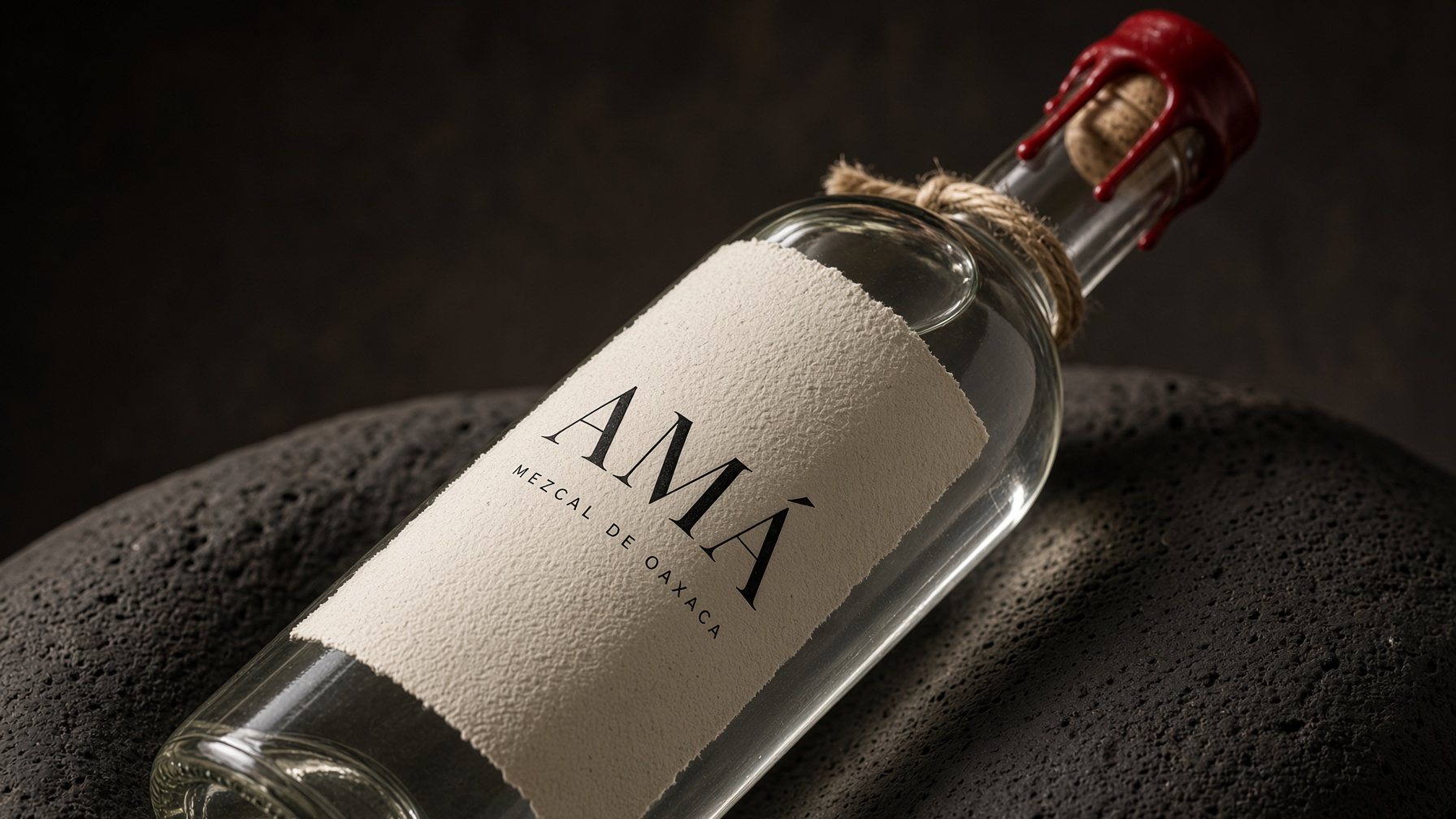
The bottle is our tribute to her hands.
The name
Amá
What children in the Oaxacan countryside call their mother. The person who taught us patience, and the one who makes every batch.
The seal
Red of the grana
The wax over the cork is the red of grana cochinilla, the dye Oaxaca gave the world, made from an insect that lives on the nopal.
The label
Cotton paper
Torn by hand, never cut. Each label has its own edge, like each batch has its own character.
The cord
Palm fibre
Twisted palm, the same fibre used for petates and baskets in the Mixteca. Tied at the neck, one knot at a time.
The Mezcal
Smoke. Earth. A sweet, long finish.
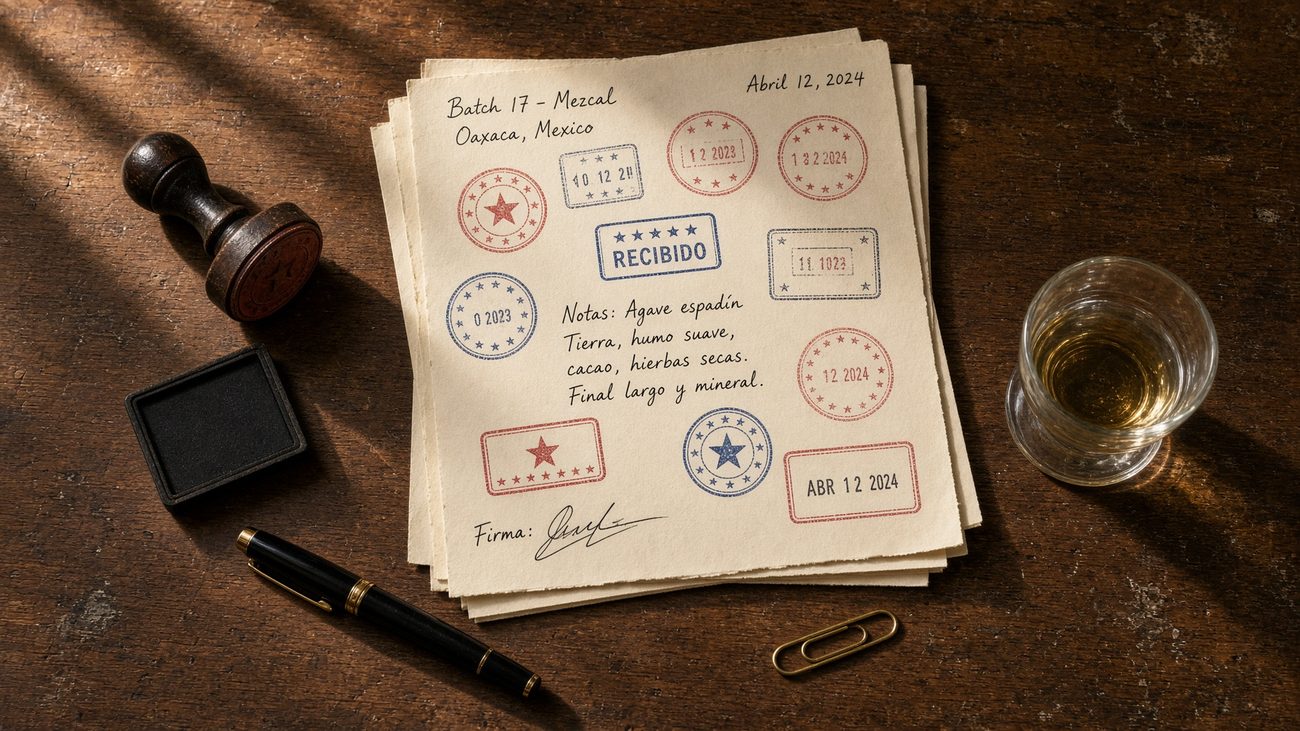
Before it crossed a border, it crossed every desk.
The mezcal was ready long before the world was. Taking it out of Oaxaca meant certifying where it comes from, approving every word on the label, registering to export, finding an importer, and clearing customs. Each stamp took months. We kept every one.
01
Origin
Proving it is mezcal, made in Oaxaca, from agave, the traditional way.
Aprobado
02
The label
Every word, number and letter, reviewed and approved before printing.
Revisado
03
Export
Registering a small family palenque as an exporter.
Registrado
04
The crossing
An importer on the other side, and customs in between.
En trámite
Made byAmá.
Every bottle starts in her hands and ends in yours. Her son carries the paperwork; she carries everything else.